“Doing things right isn’t the same as doing the right things”
There is an old distinction, usually credited to the late Peter Drucker, that has stuck with me across three decades of change work.
Efficiency is doing things right. Effectiveness is doing the right things.
It sounds almost too simple to matter. In practice, confusing the two is one of the most expensive mistakes a business can make, and technology projects are where it shows up most painfully.
Efficiency vs Effectiveness Matrix
I find the efficiency and effectiveness matrix a useful way to open a conversation about where a business should actually focus its effort. It works whether you run a small practice or a large firm, because the underlying question is the same for everyone: are you investing in the right things, and are you doing them well?
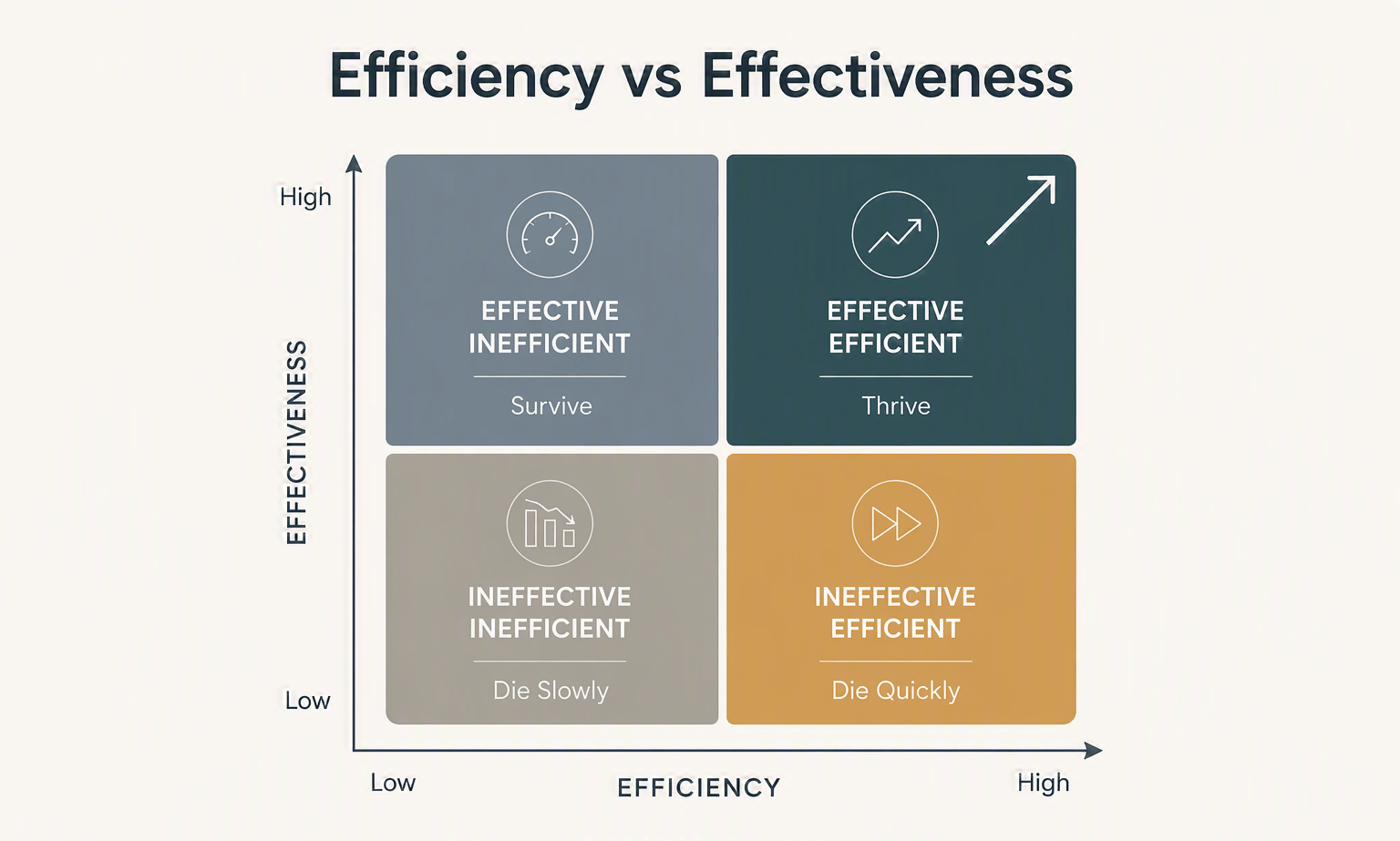
When you plot those two questions against each other, four very different positions emerge.
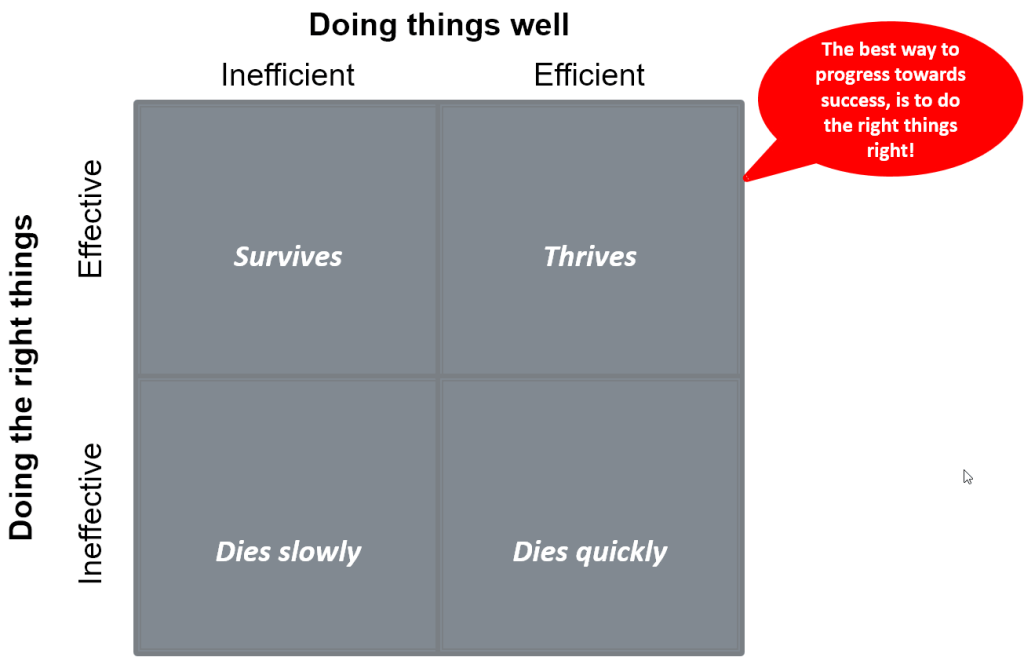
Effective and efficient: you thrive Organisations that pursue the right strategy, and execute it well, tend to thrive. Sometimes they are so effective that they outgrow their own plans, hitting their targets earlier than expected. The best of them then set more ambitious goals and keep raising the bar. This is the position everyone wants, but it is rarely permanent. It has to be worked at.
Effective but inefficient: you survive Plenty of organisations simply get by. They are pointed in the right direction and show real potential, yet they never quite hit their growth targets. The strategy is sound, but the delivery leaks time, money and energy. This is a comfortable place to sit, which is exactly why it is dangerous. Survival feels like success right up until a sharper competitor makes it look like standing still.
Ineffective and inefficient: you die slowly Some businesses have neither the right strategy nor the discipline to deliver. Effort goes in, but little of lasting value comes out. Many long-established small firms drift into this quadrant without noticing, existing in a state of quiet, permanent decline. The decline is slow enough that it never quite forces a decision, and that is the trap.
Ineffective but efficient: you die quickly This is the one that catches good people out, and it is the most relevant to technology change. These organisations are highly efficient at doing the wrong things. They may have invested heavily in modern systems and slick processes, and everything runs beautifully. The problem is that the whole machine is pointed in the wrong direction. When the strategy no longer matches the market, being efficient simply gets you to the wrong destination faster.
Why this matters more than ever with technology
Most technology projects are sold on efficiency. Faster processes, fewer manual steps, lower cost to serve. Those are worthy aims, and easy to measure, which is part of the problem. Efficiency is visible and comfortable, so it ends up as the main goal. Meanwhile the harder question, whether the project is doing the right thing for the business at all, gets less and less attention as delivery pressure builds.
This is how value leaks away. It is usually clear in the original business case, gets fuzzier as the build progresses, and is almost invisible by the time the system goes live. Everyone celebrates going live on time and close to budget, and two years later the benefits that justified the whole thing have not appeared. The delivery was efficient. It just was not effective.
The lesson is not to abandon efficiency. It is to refuse to let efficiency stand in for effectiveness. A well-run project delivering the wrong outcome is not a success with a few rough edges. It is a failure that happened to arrive on schedule.
Where does your business sit?
It is worth being honest, service line by service line rather than as a comfortable average. Are you as effective as you are efficient across everything you do? Which parts of the business are quietly thriving, and which are efficiently heading somewhere you would rather not go? If a technology project is on the horizon, have you defined what a genuinely valuable outcome looks like, or only how quickly and cheaply you can deliver it?
If those questions are easy to answer, you are in good shape. If they are not, that is usually the most valuable place to start.
If you would like a straight conversation about where your effort is best spent, and how to make sure your next change delivers real value rather than just efficient activity, book a discovery session and we can talk it through.